



TEDDINGTON’S ALLOTMENTS CONTROVERSY MAKES THE SUNDAY TIMES

FROM THE SUNDAY TIMES
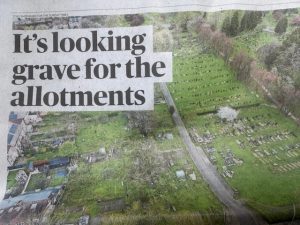
After 50 years on my allotment, the council is bulldozing it for graves
Richmond council plans to expand Teddington Cemetery into the 120-year-old allotments despite nearly 1,700 residents opposing the idea
For almost half a century Paul Cuff has carefully tended to his small plot of land at Shacklegate Lane allotments in Teddington, southwest London.
In that time he has defied the unpredictability of British weather to grow an assortment of fruit and veg — from mangetout and kale to rhubarb and damsons. Only carrots, he concedes, have eluded him. “It’s the wrong sort of ground,” said Cuff, 79. “They don’t do too well.”
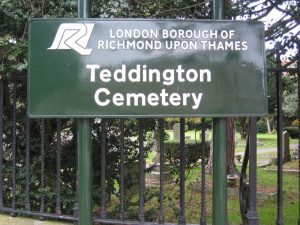
But his days working the soil are now numbered. Last year Richmond council confirmed it was closing the 120-year-old allotments and would be using the land to expand Teddington Cemetery, which borders the site and is set to run out of graves from next year.
The closure, coming in September, has prompted outrage in the community. Last week a petition signed by nearly 1,700 residents opposing the plan was submitted to the council, which owns the land used for the allotments.
About 15 holders remain at the 36-plot site after the council stopped people taking on new leases, even though the waiting list for a spot is about 3,000 people.
An extensive campaign has also been launched to save the site. Members have submitted freedom of information requests, set up an account on Instagram and scoured the gaps in Teddington Cemetery to interrogate the council’s claims that there isn’t enough space for more graves.
The council, however, is digging in. It says the £230,000 extension will create 734 new burial plots and guarantee space at the cemetery for the next three decades. Since 2022 an average of 30 new burial plots have been sold every year, figures show, which can cost up to £3,800 for residents and £7,600 for non-residents.
Local authorities do not have a legal obligation to provide burials for residents. When a cemetery becomes full, a council can either seek new ground to establish a cemetery site or cease to provide services to their residents. In the latter scenario, some people turn to different councils that have space, which will charge a higher fee for non-residents.
Richmond council has also claimed, to the dismay of locals, that bulldozing the allotment and replacing it with graves and headstones will boost the area’s biodiversity by 16 per cent.
“I’m gutted, absolutely gutted. It helps keep me fit,” said Cuff. “It’s a massive part of our community. We want to preserve this so future generations can benefit from it and can grow food, like we have.”
This stand-off isn’t unique to the vegetable growers and councillors of Teddington. Bristol city council is also attempting to ease grave shortages by expanding a public crematorium and cemetery on to the city’s last working farm, which is on land leased by the council.
Across the country local authorities are now grappling with the issue of Britain’s overflowing public cemeteries and how to make new space for the dead. The Institute of Cemetery and Crematorium Management (ICCM) said grave space in the UK was at “crisis levels”. In 2013 nearly half of England’s councils said their cemeteries would run out of space within two decades.
A burial audit conducted by the Greater London Authority (GLA) in 2010 concluded that nearly 300,000 new graves would be needed by 2030 to ease the capital’s shortages. In Richmond, just over 6,000 extra graves were needed, the GLA found. An updated review for the city is expected to be released within weeks.