



WARTIME HERO’S GRANDSON MAKES HISTORIC VISIT TO BUSHY PARK TO LEARN SECRETS OF ITS PAST (Photo News Special)
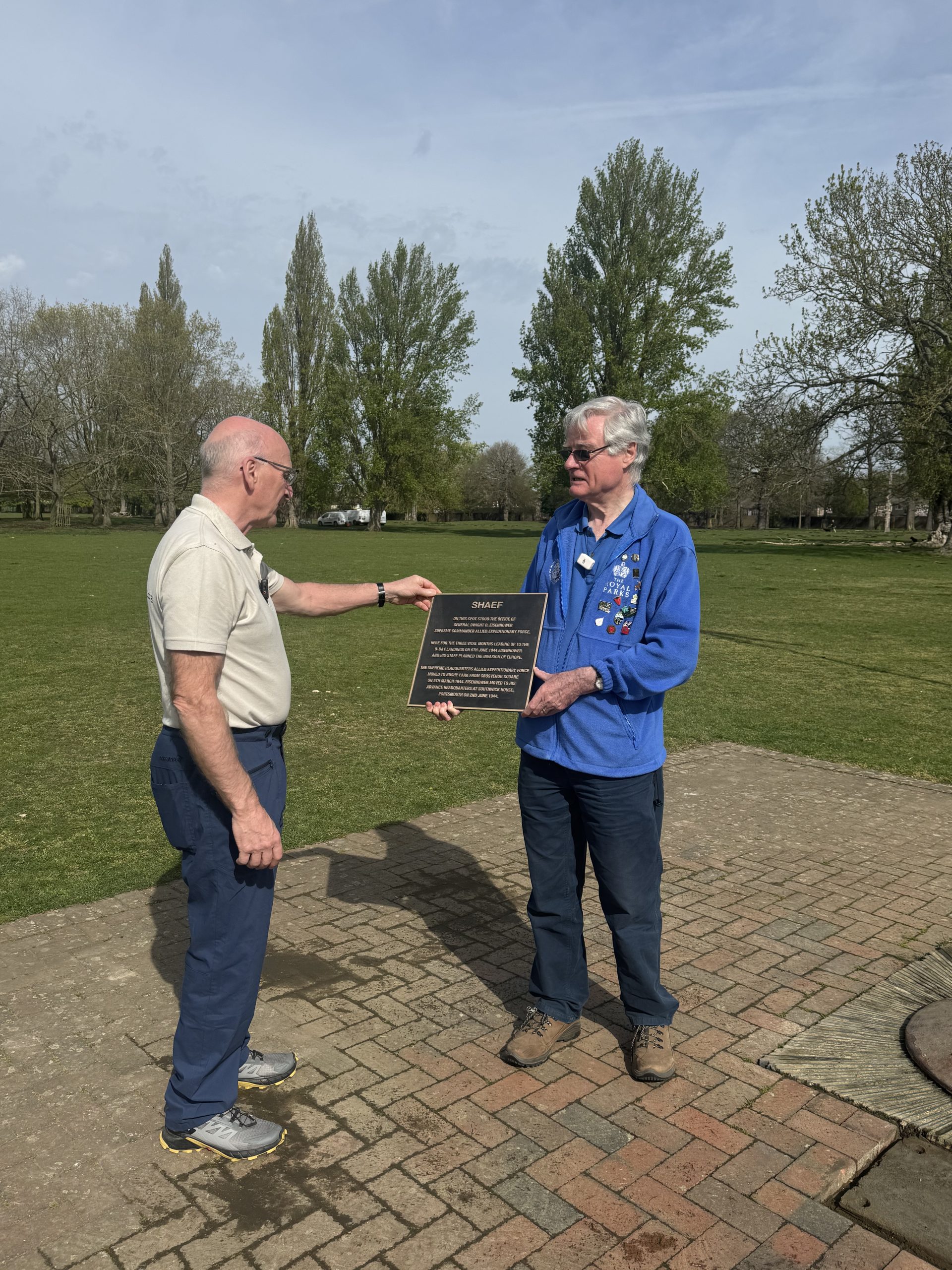
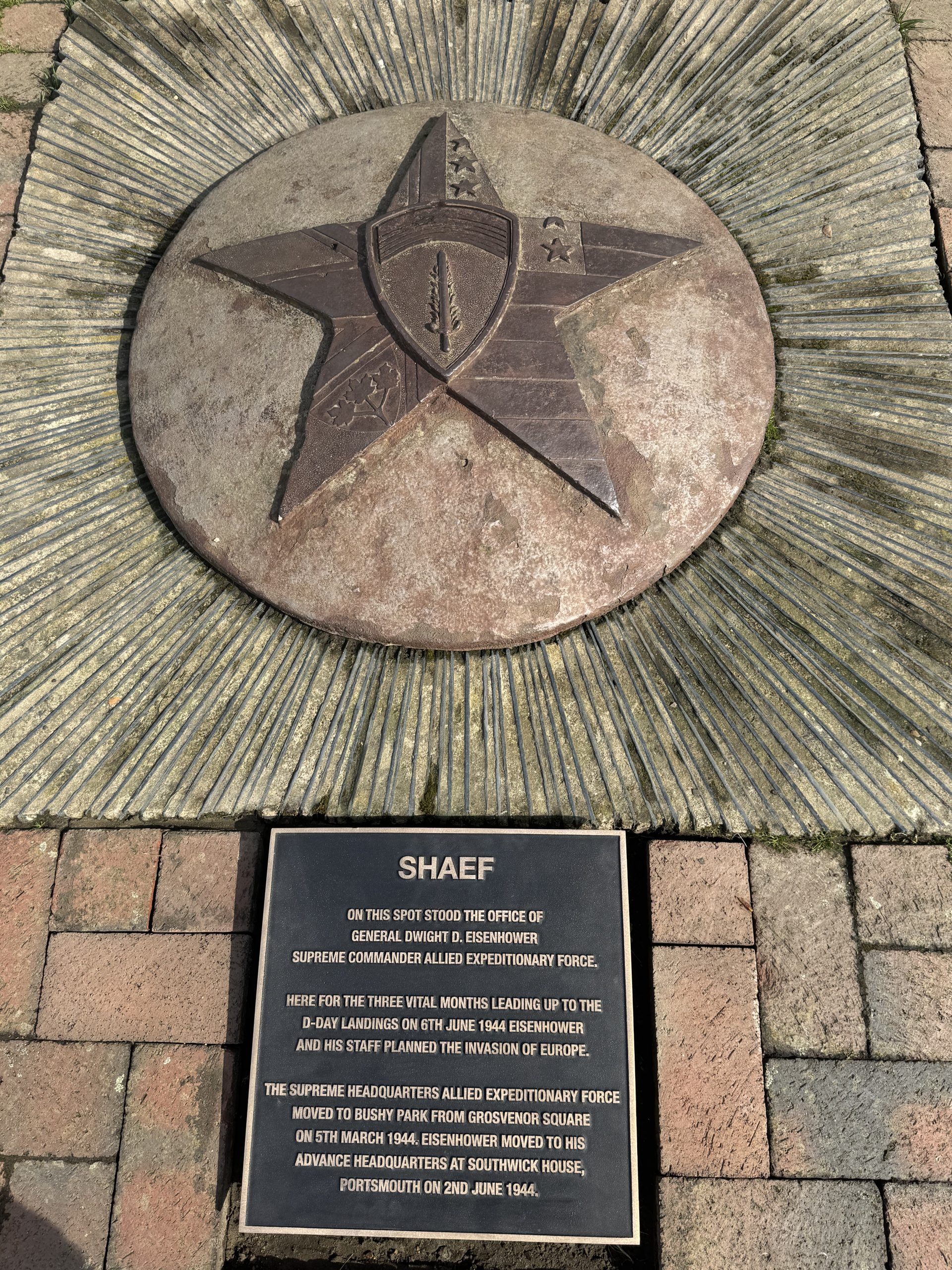
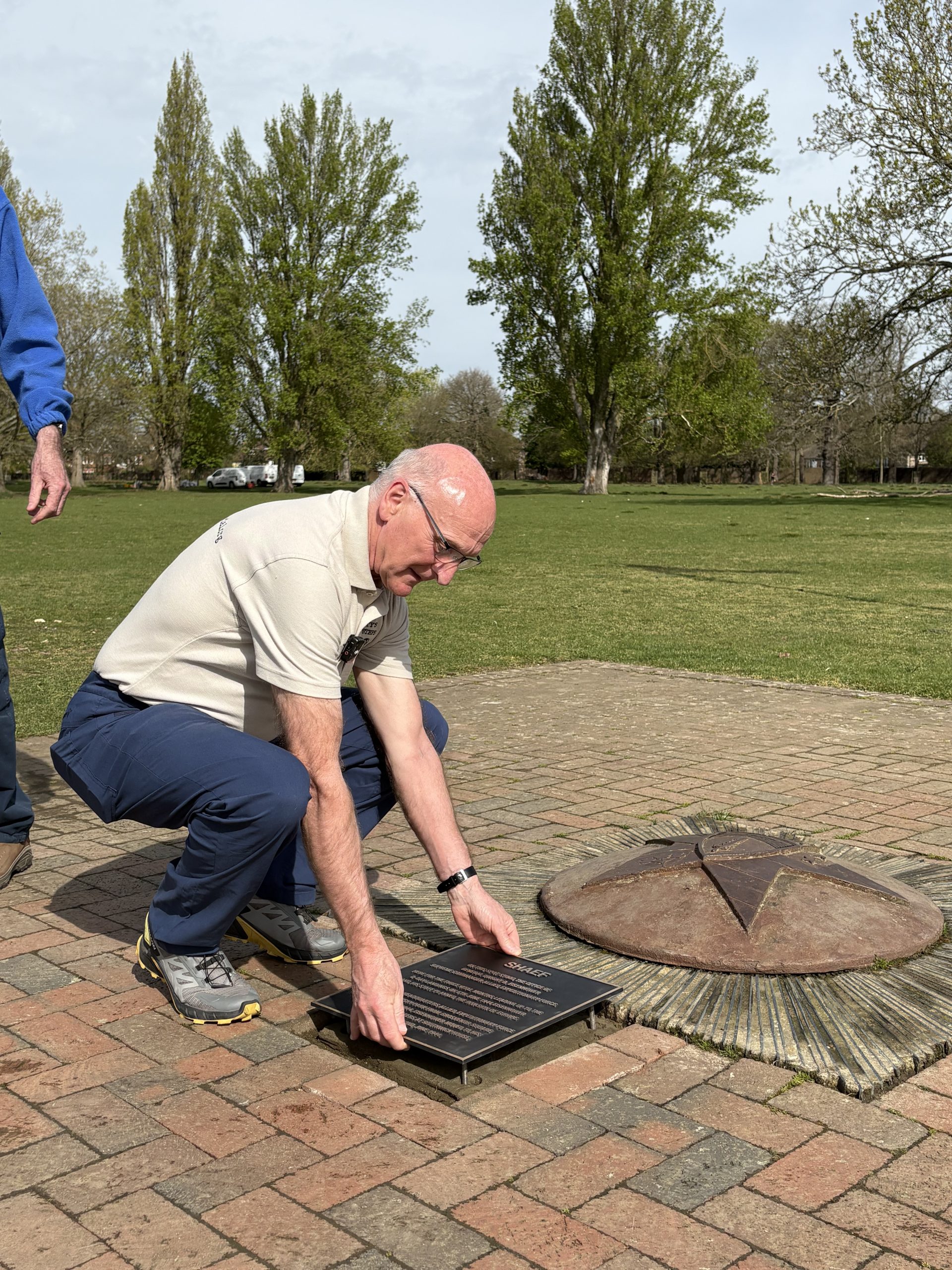
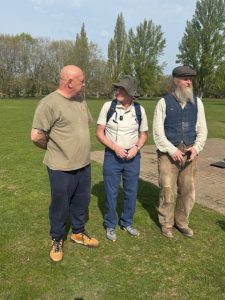
The grandson of wartime hero Field Marshal Bernard ‘Monty’ Montgomery (left) visits the SHAEF (Supreme Headquarters Allied Expeditionary Force) monument and is invited to place the commemorative plaque by historian David Ivison in Bushy Park yesterday (thurs) Photo – Stuart Higgins
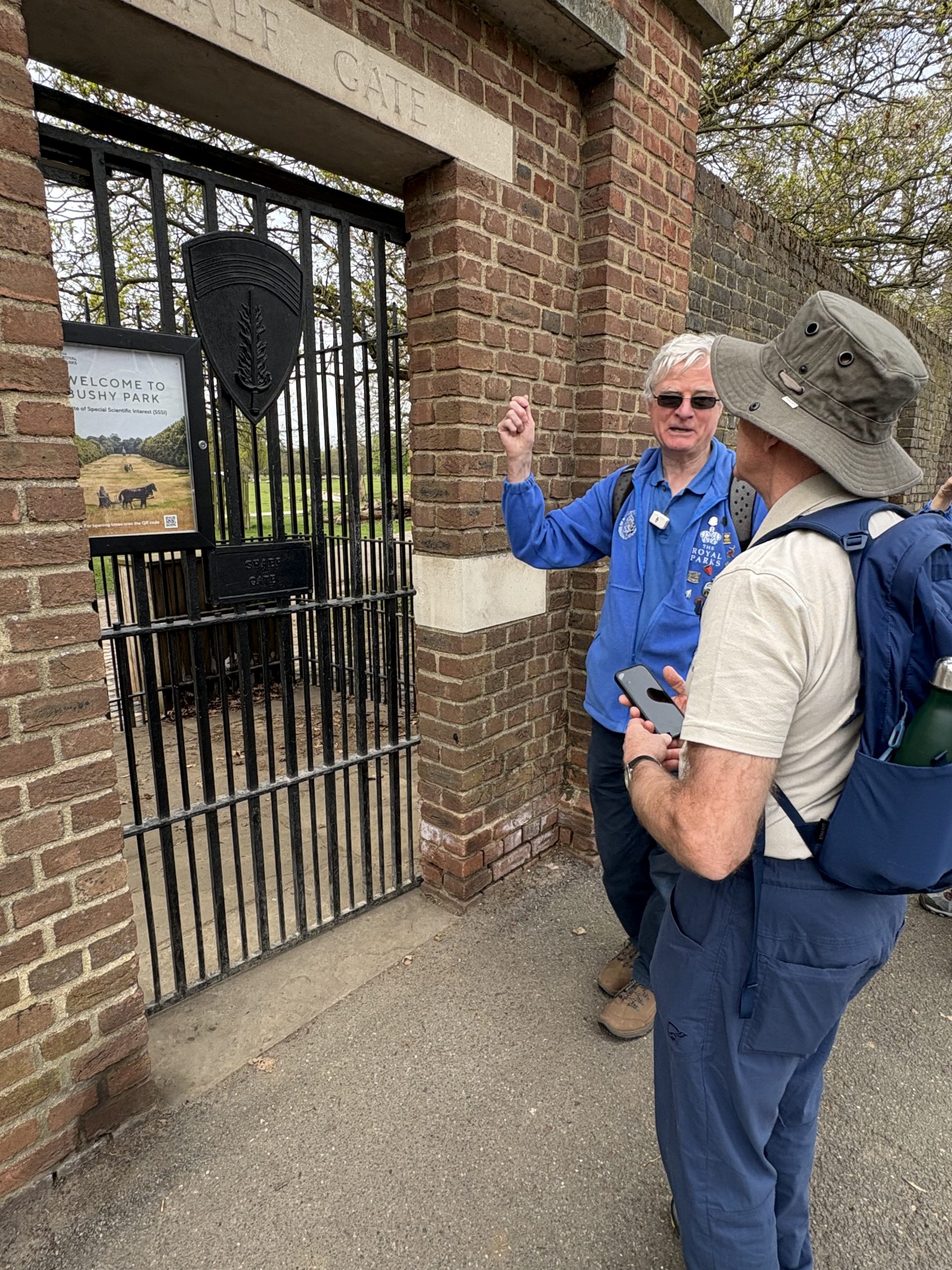
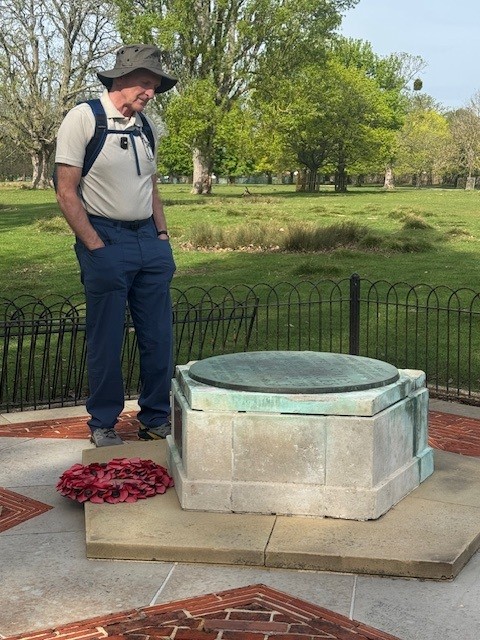
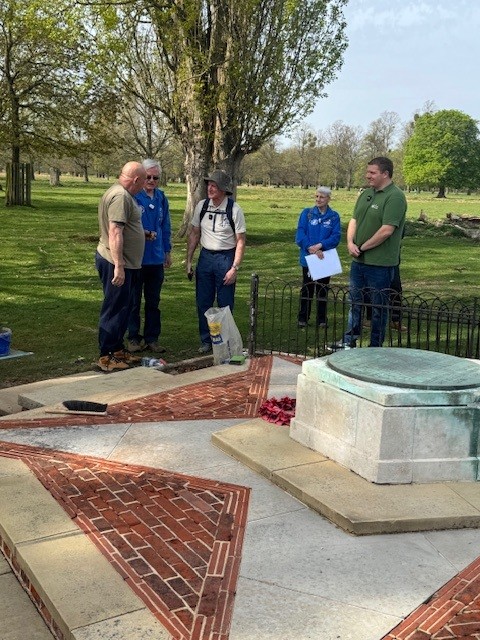
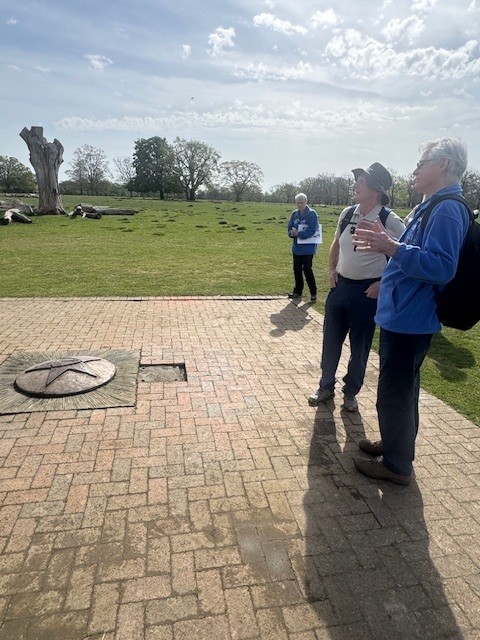
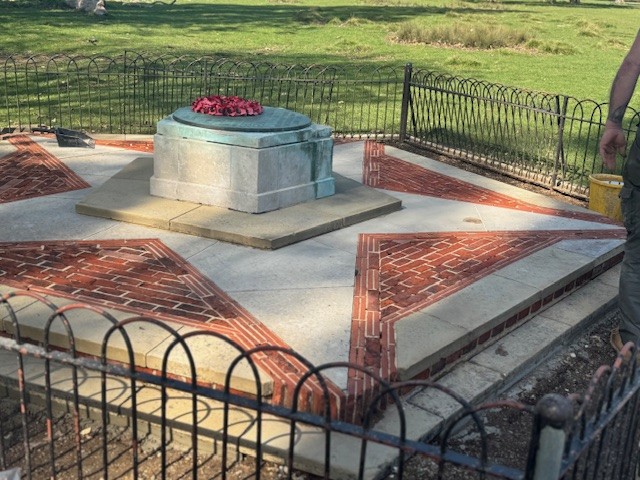
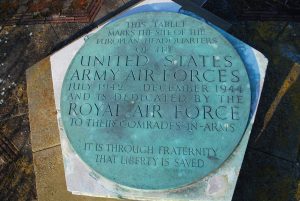
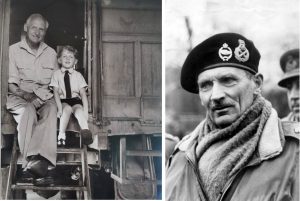
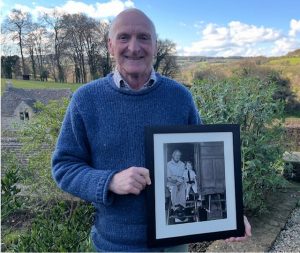
The grandson of wartime hero Field Marshal Bernard ‘Monty’ Montgomery visited Bushy Park yesterday (thurs) to see the newly-renovated monuments of the Second World War and learn about the vital role played by the park when it was turned into a US military base called Camp Griffiss and a base for the Supreme Headquarter Allied Expeditionary Force (SHAEF).
In March 1944 Camp Griffiss, Bushy Park became the location of the Supreme Headquarters Allied Expeditionary Force (SHAEF) led by General Eisenhower. It was from here that the plans for Operation Overlord, the D-Day landings in northern France, were finalised.
Monty’s role in the operation was to lead the joint US. Canadian and British army forces in the initial phases of the invasions which took place on June 6 1944.
Now his seventy-one year old grandson, Henry Montgomery, Third Viscount of Alamein, has embarked upon a historic and nostalgic 4000 mile journey called ‘In Monty’s Footsteps’ travelling through the UK and Normandy to uncover the extraordinary human stories leading up to D-Day and the role of his grandfather in raising the morale of the troops and the country as a whole.
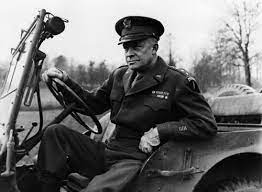
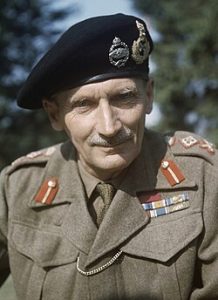
Among them, he will meet Second World War veterans, relatives of those who served and those who fell, people who lived through the war as children and historians with first-hand accounts.
He says: “To my shame it was not until 2014 when I first met veterans from the Normandy Campaign, that I began to realise the significance of D-Day and the Battle that followed.
“Since then, I have had the privilege of hearing their stories first-hand. Stories of ordinary men and women doing extraordinary things. Thanks to them we, in Western Europe, have enjoyed over 80 years of unprecedented peace and freedom. That is being challenged now.
“It is more important than ever to ensure younger generations learn the cost at which our freedom was bought and are motivated to continue “winning the peace”. That is the aim of the Memorial’s educational programme which I hope will help many people learn this important message at a much younger age than I did.”
Today, he was visibly moved as he was invited to lay the restored plaque in Bushy Park at the actual spot where General Eisenhower, who was the supreme commander of the Allied Expeditionary Force, had his office just to the left of the park inside the Teddington entrance gate near the flagpole.
He revealed that he was in regular touch with Susan Eisenhower, who lives in Washington DC and is granddaughter of the General who later became the 34th President of the United States, and planned to be in contact with her about his Bushy Park experience. “She will be very interested in all of this and the strong links with her grandfather,” he told Teddington Town.
Today he arrived by train at Teddington Station and later had a light lunch in Bushy Park’s Pheasantry Cafe – with other visitors totally unaware of his identity and historic wartime links.
His guides for the historic visits were David Ivison, a Trustee of the Friends of Bushy and Home Parks, which led the project to restore the two important monuments and his wife, a fellow Trustee, Claire.
Henry recorded their conversations which included details about why the camp was set up at Bushy Park, where the huts were positioned and who built them, how the officers spent their leisure time (The Foresters Arms at Hampton Wick was a popular watering hole, according to David)
They also discussed how Camp Griffiss got its original name from Colonel Townsend E. Griffiss who was the FIRST United States airman killed in Europe after the US joined World War 11. Aged just 41, he was returning from a mission in the Soviet Union when he was mistakenly shot down by friendly fire in 1942. David told Henry that a surviving relative of Colonel Griffiss had also visited Bushy Park.
Their discussion also touched on the crucial issue of the weather for the D-Day landings which was made more complicated because of a serious disagreement between the US and the British weather experts. “The British based their assessments on scientific information,” David told Henry. “While the US relied on data based on historical facts. Fortunately, the British intelligence was much more accurate and eventually accepted by both sides.”
David took Henry to the Warren Plantation – which is now a fenced-off safe area for the deer – but was a specific area for the men’s huts in 1944 and he explained to Henry how telephone wire-insulated points could still be seen in some of the trees as remnants of the elaborate communication system at the camp.

Henry then revealed that his grandfather’s diary contained only one word in his entry for June 3 1944 – three days before the actual Normandy beach landings – and that one word was WEATHER.
Henry, who lives in Gloucestershire, has worked in agriculture all his life, mostly as a farm management consultant.
He is president of The Spirit of Normandy Trust, Trustee of the Normandy Memorial Trust and Patron of both The Portsmouth D-Day Story Trust and The Friends of the Fusilier Museum Warwick.
He travels to Normandy each year with veterans of the Normandy campaign to commemorate the anniversary of the D-Day Landings.
He will be travelling throughout April and May meeting over 75 groups of people, visiting almost 40 locations and covering more than 4,000 miles in Britain and Normandy.
You can follow Henry’s journey @BritishMemorial on Facebook, X and Instagram.
From Friday 1st May 2026, ‘In Monty’s Footsteps’, the podcast and documentary series, will be available across all major podcast platforms.
On the website for the In Monty’s Footsteps journey Henry writes: “To me, Monty was simply ‘Grandfather’. To many though he was a national hero.”
“Intrigued by this, I visited the Imperial War Museum to look through his diaries. I was struck by the scale of his journey in the weeks before D-Day – travelling the length and breadth of Britain, meeting the troops, watching training exercises and visiting factories. The purpose was to raise morale not just in the troops but in the country as a whole.
“Inspired by this, I am going on a journey of my own – ‘In Monty’s Footsteps’ – and I invite you to join me.
“Over the course of eight weeks of travelling through Britain and Normandy, I hope to uncover and share the human stories behind that moment in history, while supporting the educational work of the British Normandy Memorial.
‘In Monty’s Footsteps’ will reflect on the national and individual collective effort, sacrifices and personal stories that shaped and ultimately ensured the remarkable success of D-Day and the Normandy Campaign.
“Every one of the more than 22,000 names on the Memorial’s Roll of Honour has a story. Through its education programme, those stories are brought to life – helping young people understand not just what happened then, but why it matters today.
“The Memorial has developed a new immersive experience called ‘Operation Remembrance’ to engage young people and bring to life why the story of Normandy matters today.
‘In Monty’s Footsteps’ will raise funds towards making this opportunity open to more schools and families by extending the existing Winston Churchill Centre for Education and Learning. (The Winston Churchill Centre – British Normandy Memorial)
“I would be so grateful for your support in helping to preserve the legacy of these people and their stories for future generations by becoming a Memorial Guardian or making a one-off donation.”
 YOU CAN LEARN MORE ABOUT THIS: In Monty’s Footsteps – British Normandy Memorial
YOU CAN READ MORE ABOUT FIELD MARSHAL BERNARD LAW MONTGOMERY’S LIFE AND CAREER HERE: Bernard Montgomery – Wikipedia
British Normandy Memorial
The British Normandy Memorial stands on a hillside in Ver-sur-Mer above Gold Beach in Normandy, a place where history was shaped. On the columns of the Memorial the names of more than 22,000 servicemen and women from more than 30 nationalities who lost their lives on D-Day and during the Battle of Normandy are inscribed. The site of the Memorial was selected by Normandy Veterans during a consultation process in April 2017. It was formally opened on 6 June 2021 by the then Prince Charles, Prince of Wales, as Royal Patron of the Normandy Memorial Trust.
On D-Day 80, 6 June 2024, the Winston Churchill Centre for Education and Learning was opened by Their Majesties The King and Queen, which features two exhibition galleries, a classroom space, shop and café.
The Centre’s principal sponsor is BAE System.