



LOCAL DESIGNATED BATHING AREA IS POLLUTED, ENVIRONMENT AGENCY ANNOUNCES
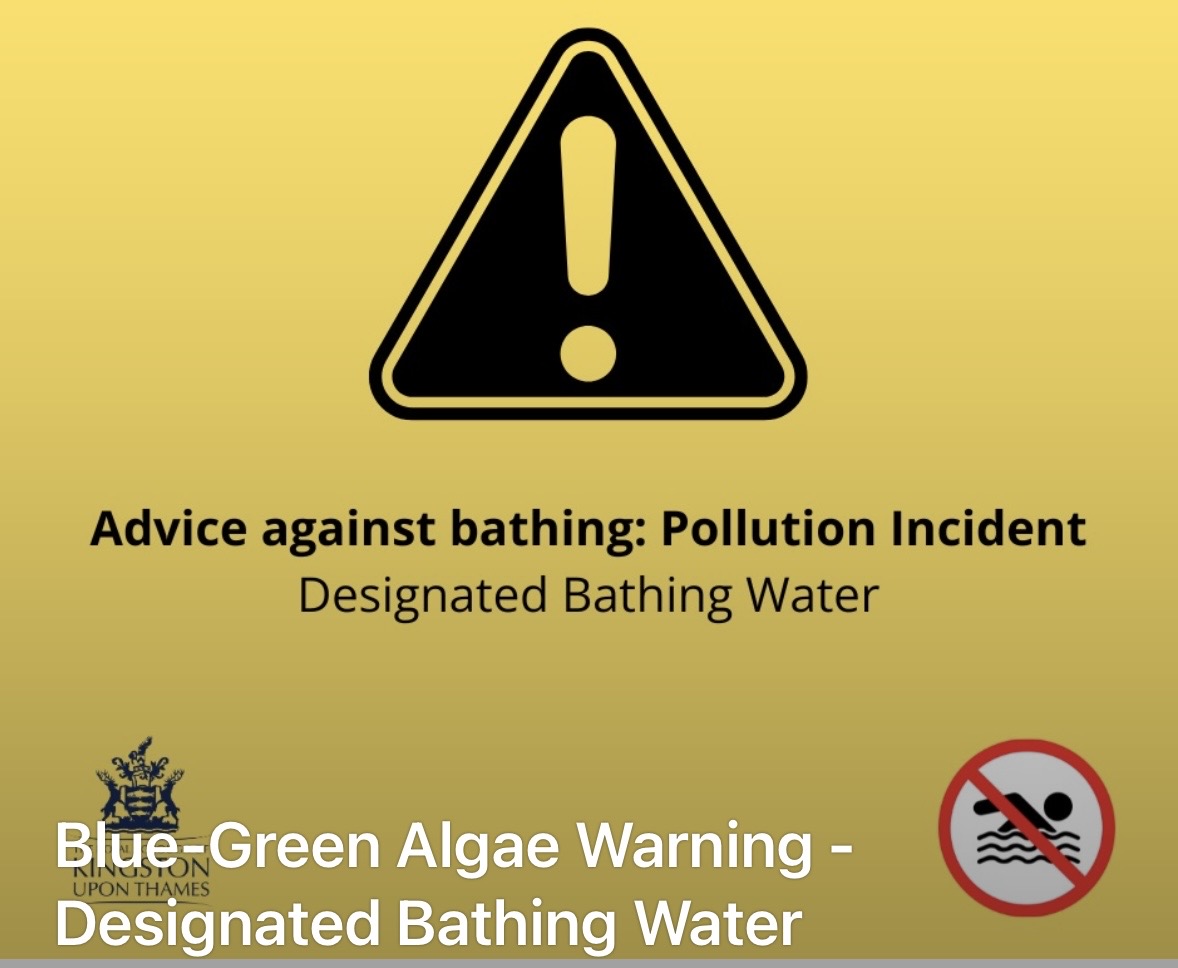
Swimmers and paddleboarders have been warned today to stay out of the water at the recently designated bathing area near Kingston because of pollution by toxic algae.
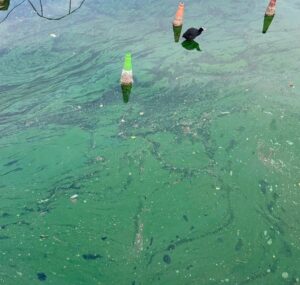
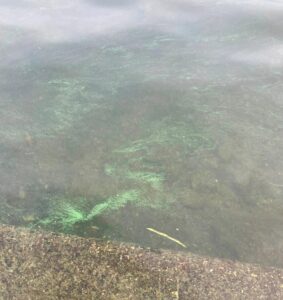
The Environment Agency has confirmed the presence of potentially toxic blue-green algae in the River Thames in and around Kingston’s Designated Bathing Water.
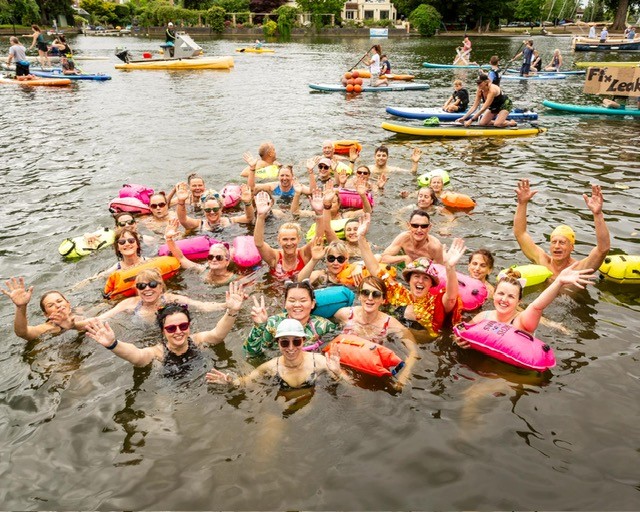
Teddington Bluetits organiser Marlene Lawrence told Teddington Town she was amongst 30 social river swimmiers who were in the designated spot on Sunday. She said: “I haven’t stopped itching since. This is the first time we have seen this in the river but the heat makes it worse and it is fatal for dogs.”
Her group have stopped their swimming sessions since the discovery.
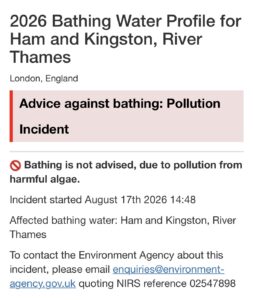
A spokesperson said: “To keep everyone safe, we strongly advise residents and visitors to follow these precautions:
- Do not swim, paddle, or enter the water in affected areas until further notice.
- Keep dogs out of the water – blue-green algae is extremely dangerous to pets.
- Avoid contact with visible algae near the riverbank.
“We are working alongside the Environment Agency, who are monitoring the algae, and will share further updates as soon as they are available.”
The area between Ham and Kingston was designated as the first official swimming area in London in May this year and is one of only thirteen spots in the whole country.
The specific area on the Ham side of the river was shortlisted as a new river bathing water after campaigners gathered evidence to show thousands of people use the river for swimming throughout the year.
Marlene Lawrence, the founder of the river swimming group, Teddington Bluetits, which has more than 2,000 members, put in the bathing water application alongside her colleagues.
“This would be amazing for the river and for the many people who enjoy it,” she said. “We want bathing water status to be a driver of keeping the River Thames clean and it will be fantastic to have this part of the river designated.”
She told Teddington Town: “I am over the moon about achieving bathing water status for our little bit of the Thames. It is so well-used all year round, not just by swimmer bhut by families, paddle boarders, sailors, kayakers and rowers. We have all known how lucky we are to have this on our doorstep and I will always promote swimming in the Thames.”
The news, which has significant media coverage today, comes as Thames Water attempts to introduce a controversial new sewage recycling system to draw off tens of millions of litres of water a day from the Thames near the proposed bathing water area and replace it with treated effluent from the large Mogden sewage works in west London to help tackle water shortages.
Ian MacDuff, who is leading the campaign against a Thames Water sewage treatment scheme said: “It’s deeply concerning, but sadly not surprising, that London’s new bathing site at Ham and Kingston has been hit by a toxic algae warning just weeks after opening.
“Toxic algae experiences turbo charged growth with sewage overflows in warm, sunny conditions — exactly what you’d expect just downstream from the Hogsmill that has failed its recent environment audit.
“Just imagine what it will be like if they tip in an additional volume of treated sewage under Thames Water’s TDRA plans. Families were promised a safe place to swim and enjoy the river not a public health gamble.”
- Human health: Causes skin rashes, eye irritation, nausea, vomiting, or breathing difficulties if swallowed or inhaled.
- Animals: Poses a severe, potentially fatal risk to dogs, livestock, and wildlife that drink or swim in affected water.
- Ecosystems: Can choke aquatic life by blocking sunlight and depleting oxygen levels when the bloom decays.
The Lensbury Watersports centre was advising people not to swim or paddleboard and if they fell in while rowing or kayaking they should get out and shower immediately.
This is the advice on the government website:
Algal blooms in inland waters
Algae occur naturally in inland waters such as rivers, streams and lakes. When conditions are ideal for growth, an algal bloom can occur. During a bloom, the water becomes less clear and may look green, blue-green or greenish-brown. Scums can form during calm weather when several bloom forming species rise to the surface. This can look like paint, mousse or small clumps.
Cyanobacteria or ‘blue-green algae’, a type of blooming algae, can produce toxins. These toxins can kill wild animals, livestock and pets. They can also harm people, producing rashes after skin contact and illnesses if swallowed.
Algal blooms block sunlight from reaching other plants in the water. They also use up oxygen in the water at night which can suffocate fish and other creatures. Oxygen is also used up when the bloom decays.
https://whatsapp.com/channel/0029VaySUhr6hENo1J7M8E41/227
more to follow