



BUSHY PARK’S LINK TO NEW D-DAY WEATHER MOVIE ‘PRESSURE’ (News Special)
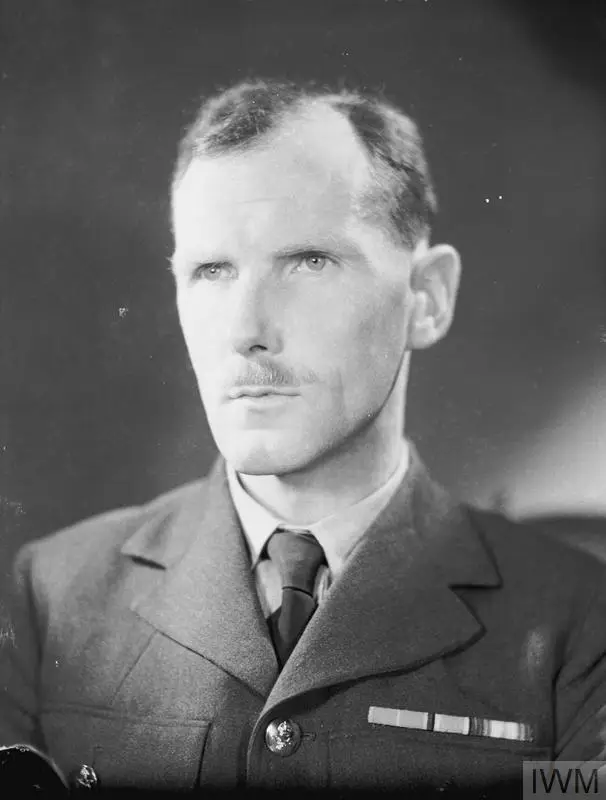

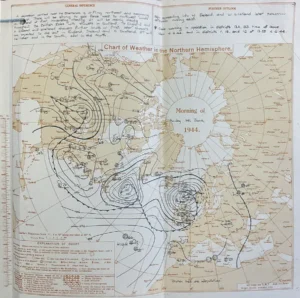
The military meteorologist Group Captain James Stagg, who gave the crucial advice to General Eisenhower about the weather for the D-Day landings in Normandy, worked at Bushy Park when it was a military base known as Camp Griffiss.
Despite our daily obsession with the weather it is not often that a one-hour forty minute film can be dedicated to weather charts and data but the new film ‘Pressure’ starring Andrew Scott as Captain Stagg, Damian Lewis as General Bernard Montgomery and Brendan Fraser as Eisenhower does just that.
Bushy Park – as the headquarters of SHAEF (Supreme Headquarters Allied Expeditionary Force) – merits a brief mention in the first ten minutes of the film but most of the tense decision-making action is based at Southwick House in Portsmouth, which was the base for the combined British And US meteorlogical teams in the days before the allied invasion, codenamed Operation Overlord, which finally took place on Stagg’s advice at 6.30am on June 6th 1944.
Stagg received an Emergency Commission as a Group Captain in the Royal Air Force Volunteer Reserve. He was subsequently appointed Chief Meteorological Officer at the Supreme Headquarters Allied Expeditionary Force (SHAEF)
Stagg was physically working at SHAEF in Bushy Park during the crucial months of March–May 1944, preparing the weather advice that Eisenhower and his service commanders relied upon. Monuments still exist in the Park showing C Block where Eisenhower’s office was built and where Stagg would have spent much of his time updating his weather reports.
Then, as the invasion approached, he moved forward with Eisenhower to Southwick House, where the famous final weather conferences took place.
In early 1944, a joint British-American Meteorological Section was established specifically to provide weather forecasts for D-Day.
The team collected data from several sources. During the week before the planned invasion on 5 June, eight British and American weather ships were stationed at designated locations across the Atlantic to monitor and report atmospheric conditions.
In addition, the Royal Air Force carried out a series of meteorological reconnaissance flights, although the information obtained from these missions was sometimes considered unreliable.
Together with weather reports from the west coast of Ireland, these observations provided a broad picture of conditions across the North Atlantic. The data was then analysed by Stagg and his team who interpreted the forecasts. They then supplied senior SHAEF commanders with the information they needed to determine whether weather conditions were suitable for launching the invasion.
As forecasts continued to be updated throughout the weekend, it became increasingly clear that the invasion could not go ahead on Monday 5 June, as planned. Senior commanders met repeatedly to review the latest meteorological assessments and consider their implications.
During a crucial meeting on the night of 4 June, Stagg and his team advised that a brief improvement in conditions was likely on 6 June. On the basis of this forecast, General Dwight D. Eisenhower made the decision to proceed, reportedly remarking: ‘Well boys, there it is, I don’t see how we can possibly do anything else.’
Soon afterwards, the invasion began. The forecasts had been made, the decision had been taken, and the success of the operation would now depend on events unfolding across the English Channel.
In the early hours of 6 June 1944, more than 150,000 Allied troops landed by sea and air onto five beaches in Normandy, France. While the weather conditions were not perfect, it was better than the previous day – Stagg’s judgement had proved correct. The Allied troops were able to make good progress, despite heavy casualties. By the end of the day, they had taken all the beaches they had set out to hold.
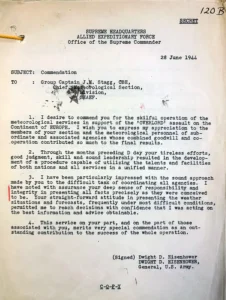
Eisenhower, who went on to become the 34th president of the United States, would later commend James Stagg’s team, writing:“I wish you to express my appreciation to the members of your section and the meteorological personnel of subordinate and associated agencies whose combined goodwill and co-operation contributed so much to the final results.”
After the war Stagg, who was awarded an OBE, returned to the Met Office. In 1971 he published Forecast for Overlord, in which he gave his account of D-Day. He died on 23 June 1975 at the age of 74.
You can read more about the amazing story here: James Stagg: The weatherman who turned the… – The National Archives
Watch a trailer here: Pressure (2026) – IMDb
Pressure | Official Website | 9 September 2026