


LOCAL HISTORIAN SHARES AMAZING STORIES OF TEDDINGTON PEOPLE AND PLACES
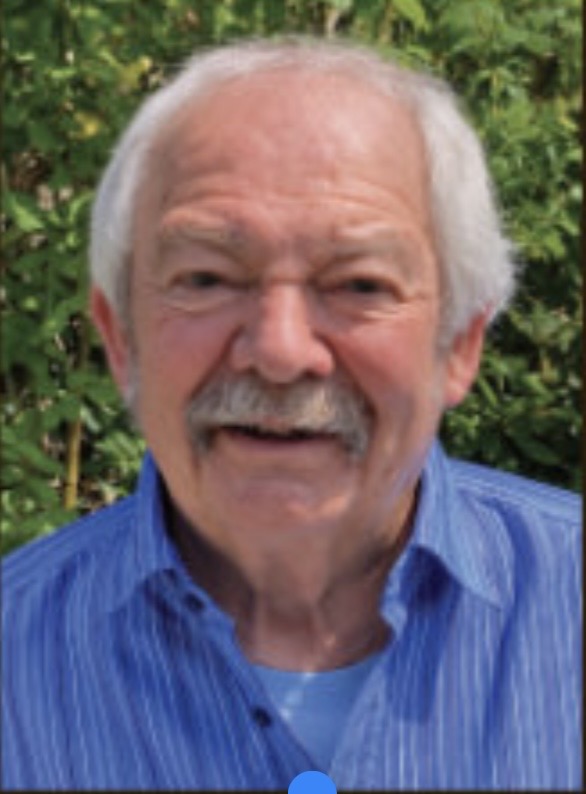
KEN HOWE IS A LOCAL HISTORIAN AND AUTHOR AND HIS VIVID ACCOUNT OF LIFE IN TEDDINGTON IN VOLUME 2 OF LIFE STORIES IS TRULY COMPELLING. (Photos courtesy of Ken Howe)
I’ve lived in Teddington all my life, since 1945. I grew up living on Victoria Road right next to the Railway pub, one of a row of three cottages.
My father had a newsagent’s and tobacconist’s, called S.E. Howe on the corner of The Causeway and Park Road, it was where the recently closed Mobility Shop was, although it was split into smaller shops back then.
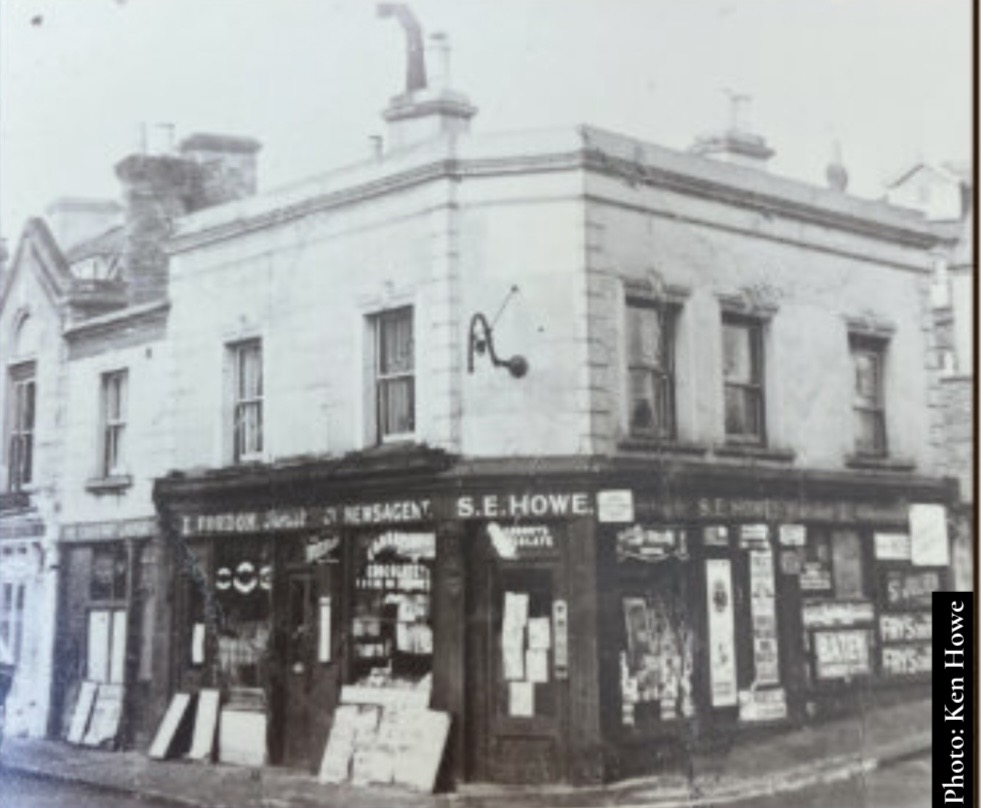
The shop was bombed in 1940 and he moved to other premises nearer Broad Stree The American soldiers were still in the Bushy Park army camp after the war – into the 1950s – and they would come into my father’s shop and he would take their bets for horse-racing and pass them onto the local bookie.
Bushy Park was like my playground when I was a kid. In the long school summer holidays, I think we used to get eight weeks then, my friend Mike would call on me and we’d go to the park just after breakfast and stay there all day until we came home for tea.
There were half a dozen of us and we made camps and played football and cricket. We virtually lived in the park during the school holidays.
The American soldiers thought it was quite funny to see a bunch of urchins running about and playing. We were about seven years old but our parents didn’t worry about us, just as long as we were back at teatime.
People would probably throw their hands in horror at that thought now, but it was completely normal then.
As the Americans moved out of the Bushy Park camp in the early 1950s, the Nissen huts they used for their barracks on either side of Chestnut Avenue became empty and word soon got around.
A lot of people who’d been bombed out of their homes in the East End of London came over and moved in illegally, but because they desperately needed somewhere to live they were just accepted until such time as they could be re-housed.
There was a bus service that ran through Bushy Park in those days, the number 27, it turned round at Hampton Court bridge roundabout and it came back to Teddington.
I remember the trolley buses that used to run through Teddington, the 605 and the 601, with the electric wires above the road connected by poles to the bus.
There was a trolley stop at the top of Elmfield Avenue and there was a turning circle there where the trolley buses would turn round.
They were amazing things and a very smooth ride. Invariably, the lead which was attached to the overhead line would come off and the bus conductor would have to use a long bamboo pole from under the bus to reattach it.
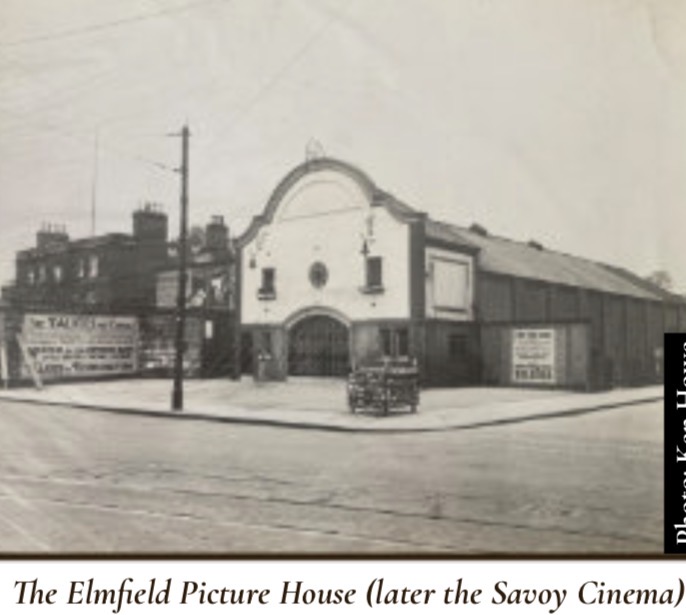
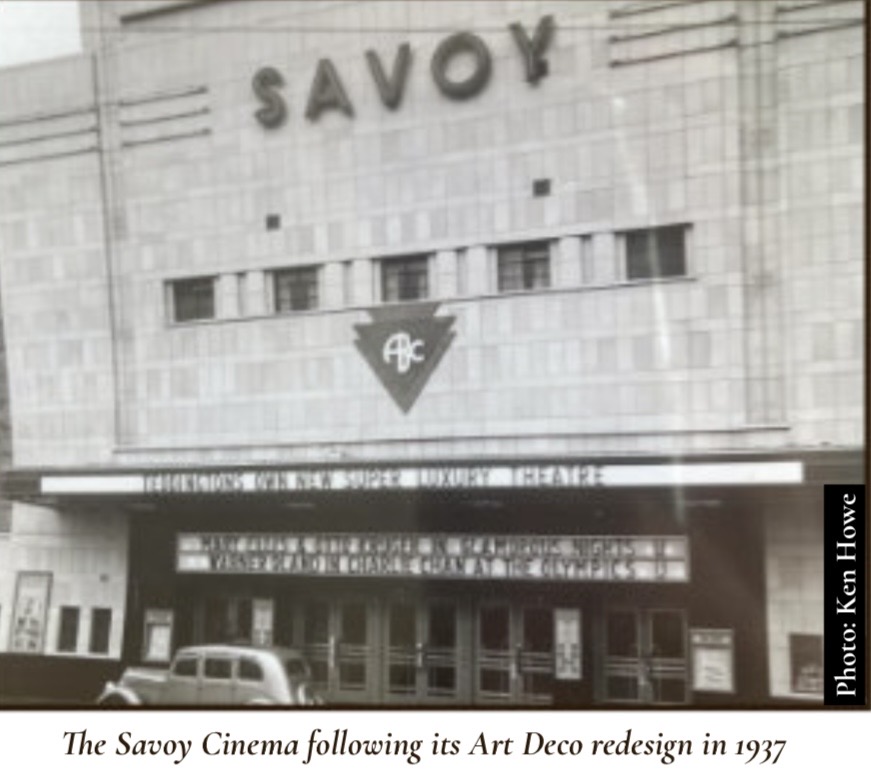
There was a cinema at the top of Elmfield Avenue, where Harlequin House is now.
It was first called the Elmfield and showed silent films before it was converted into the Savoy Cinema in the 1930s in an Art Deco style, very upmarket.
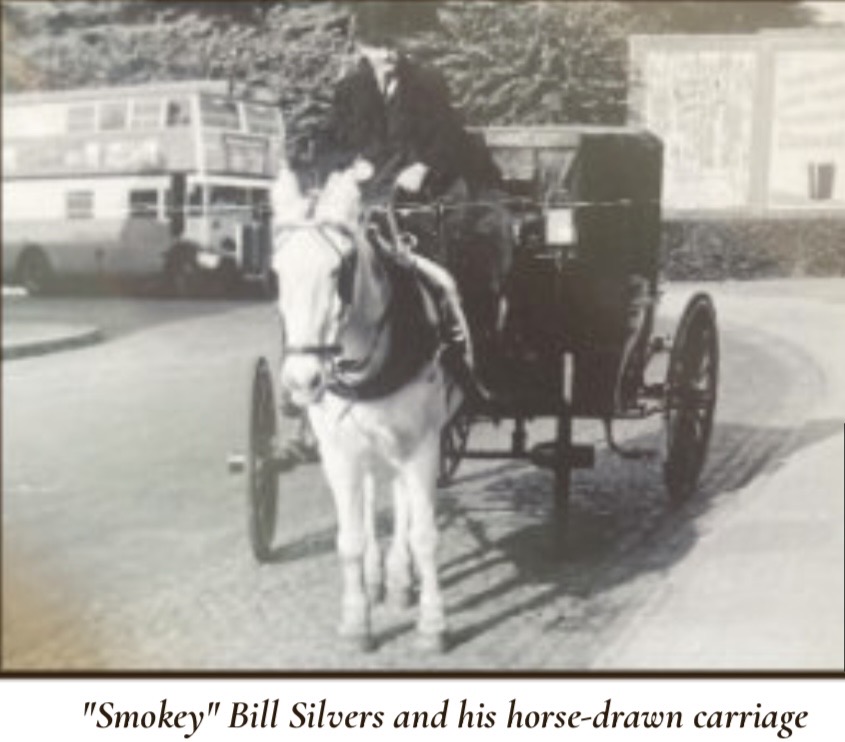
The caretaker/nightwatchman was famously murdered there in 1948. They called him ‘Smokey Bill’ and he was quite a character, he ran a pub and also had a horse-drawn carriage.
One night a guy who was down on his luck broke into the Savoy Cinema while Bill was on duty and hit him on the head and tied him up.
Poor Bill died of his injuries. The robber, Norris Megaw was tried for murder and was given a death sentence, later commuted to life imprisonment.
We used to go to the Savoy Cinema every Saturday morning to the kids’ matinee in the mid-1950s.
You paid sixpence (two and a half pence) and there was a full programme of cartoons and usually a western cowboy film – The Cisco Kid, Hopalong Cassidy, that sort of thing.
The place was packed with seven to 15 year old kids and the kids just went on their own, not a parent or adult in sight – except for the ‘spider woman’ as we called her.
She was an usherette who would shine her big torch on you if you were misbehaving, the torch light looked like a spider’s web as it shone. You didn’t step out of line with her.
I was at a perfect age when music was really starting to change, I was a teenager in the late 1950s and the only music that was accessible then was old traditional music hall type stuff The Billy Cotton Band show and Russ Conway playing piano.
It was all a bit old fashioned and then suddenly we were hearing music from America.
It started with Bill Haley and the Comets coming over to tour and gradually guitar bands became popular. Jukeboxes came over from America too.
There was a cafe in Broad Street, where Gosia’s cafe is now, it had the first jukebox in Teddington and you went in to listen to all this new, exciting music.
One day at a youth club in Teddington a couple of guys said: “We’ve been down to the Station Hotel in Richmond (opposite Richmond station) and seen this new group called The Rolling Stones, you won’t believe it, you have to see them!”
It was in 1963, I was 18, and I went to see them. They were completely different to anything, raw, high energy, five of them on this tiny stage in a small room that was rammed with people.
Mick Jagger had so little room to move so he just wriggled his body and clapped his hands and obviously developed the moves and the style he’d become famous for.
The guitarist Brian Jones was the star for me, he was the leader of the band and so cool and charismatic.
It wasn’t long before they got a residency at the Eel Pie Island Hotel in Twickenham and I went with my mates every week to see them.
It was seven shillings and sixpence to get in (37 and a half pence) It was a lot of mone then and we had to walk home because we couldn’t afford the bus fare back. But what an experience.
Eel Pie had an old ballroom dance floor, which was sprung, and all the kids were just bouncing and dancing.
We saw lots of people at Eel Pie, Cyril Davies and his Rhythm and Blues All Stars Band, with lead singer Long John Baldry, who discovered Rod Stewart. Rod, then 18, was singing on Twickenham station while waiting for a train and Baldry heard him and signed him up on the spot for Eel Pie.
The Who came a bit later. Music-wise it was just a fantastic, marvellous time to be a teenager in this area, it was so exciting.
Of course, we also had the Teddington television studios where they recorded pop music shows like Thank Your Lucky Stars and big acts would come to appear on it.
The Beatles were here too, in 1964. There were so many screaming fans on the streets and on Teddington footbridge they had to be brought in to the studios by boat.
It was quite common to see famous faces in Teddington because of the studios by the river. They would go into the Tide End Cottage and The Anglers pub which is where they gathered before a bar was eventually built in the studio itself.
Honor Blackman and Ian Hendry and their team from the original The Avengers television series, used to meet in the King’s Arms on the High Street, in the very early 1960s.
Benny Hill used to live in Teddington and was a regular in the local pubs, especially the King’s Arms and King’s Head. He was a good guy and always had time for people.
And of course he created ‘Two Ton Ted from Teddington,’ Eamonn Andrews had the first TV chat show in the UK, which was recorded for ITV at Teddington studios. He had a blue Rolls Bentley and his producer, my friend, lived in Clarence Road and one day he picked us both up in his Bentley to drive us all to an event he was opening.
We had a good chat with him. You don’t always get a chauffeur like that. Even though Doctor Who wasn’t filmed in Teddington, the third Doctor Jon Pertwee, lived in Broom Road and funnily enough he was big friends with the guy who played one of Dr Who’s biggest enemies – The Master. The actor was Roger Delgado who lived down Park Lane.
I’ve always been interested in local history since my school days and then as I got older I realised there wasn’t a great deal written about old Teddingto so, with others, I set about researching its history and that’s when my book writing started
There’s still so much to write about Teddington, and I intend to carry on because if we don’t document these facts and stories, they will be lost forever.
 Ken Howe is a prominent local historian and author.
LIFE STORIES Volume 2
30 www.tedcare.org.uk