



TEDDINGTON AUTHOR WRITES DINOSAUR STORY TO SUPPORT AUTISTIC SON
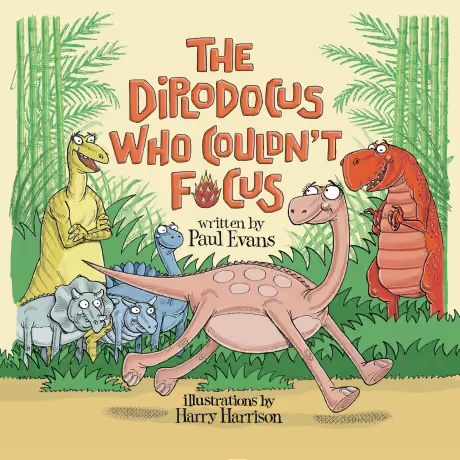
Teddington dad Paul Evans wrote The Diplodocus Who Couldn’t Focus for his son Bowen, who was diagnosed as autistic at three.
When Bowen Evans was diagnosed as autistic his family were handed very little information and left, in effect, to work out the next steps on their own.
Ten years later his father, Paul, who lives in Waldegrave Road, has written his first amazing children’s book – the one he wishes he could have found himself back then with beautiful illustrations by Harry Harrison.
“We came home with a diagnosis and not much else,” says Paul. “You find yourself searching for anything that helps you understand your child. What I wanted most was a story I could read with Bowen that showed him at his best, without turning him into the subject of a lesson.
“The story behind the story is one about seeking to help kids and parents celebrate the different ways in we all think, feel and grow.
“This follows my own journey as a parent to our Autistic son, who was diagnosed at 3 tears old, but where we were left very much without any support to work out how to understand this condition and relate to our child. This book was a response to that experience.”
The help the family needed eventually came through Bowen’s nursery and then his primary school, where Paul says they found incredible support.
Their situation is far from unusual with latest Department for Education figures published from June 2026 show that more than 1.8 million pupils in England have special educational needs, over one in five of the school population, and autism is the most common primary need among children with an education, health and care plan.

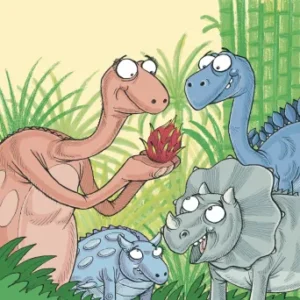
The book’s heroine, Daisy the Diplodocus, is always the last to arrive.
She is too busy chasing butterflies, watching beetles do flips and listening to birdsong in the trees. When her class sets off to find the rare Dragon Fruit, her wandering attention lands her in trouble yet again. Then the dinosaur who keeps losing focus finds something nobody else could.
Nothing in the story names a diagnosis and Paul is clear that the book belongs on every child’s shelf, not only in homes already familiar with the language of neurodiversity.
Children get a warm, funny adventure with a loveable dinosaur. A short note at the back gives parents and teachers some gentle language for talking about the different ways children think and pay attention, for those who want it.
“I’d love a child to pick this at bedtime because Daisy and her friends make them laugh and the ending makes them cheer,” he says. “If they also come away a little kinder to the classmate who’s always gazing out of the window, or a little prouder of being that classmate, then Daisy has done her job.”
The Diplodocus Who Couldn’t Focus is the first title in The Wonderfully Wired Series, in which each book follows a different character with a different way of thinking, feeling and growing. The next book in development, The Tangerine Who Loved Routine, will follow soon.
The Diplodocus Who Couldn’t Focus is published in paperback on 16th November 2026, priced £8.99, and is available from Amazon and from national and local book retailers, including to order through independent bookshops. Copies bought directly from www.wonderfullywired.comcome with a signed inscription from the author.
About the author. Paul Evans is a father, entrepreneur and neurodiversity advocate based in Teddington. He has raised money and awareness for charities supporting neurodivergent children. He is also the founder of positioning studio V2RSION and spent more than two decades leading marketing at brands including Vodafone and Microsoft. The Diplodocus Who Couldn’t Focus is his debut picture book.
About the series. The Wonderfully Wired Series is a collection of books that celebrate the different ways we all think, feel and grow. Each title focuses on a single neurodivergent trait through a different character. Every book is a story first and a lesson second: children get a warm, funny adventure, and the neurodiversity angle lives subtly in the story.