



PARK LANE STABLES ARCHITECTS WIN TOP AWARD
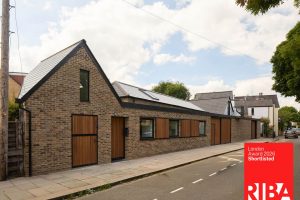
The architects of the new Park Lane Stables in Teddington have won a prestigious award from the Royal Institute of British Architects (RIBA) it was announced today.
The company Architecture:WK which is based in Teddington and run by Sam Kemlah, who told Teddington Town: “We’re absolutely thrilled to be one of the winners of the RIBA London Awards!
“Our collaboration with the brilliant Natalie O’Rourke and the Park Lane Stables RDA produced a building that, though modest in scale, is huge in ambition – and it’s ambition was to reach people, communicate with its users and accommodate their requirements to serve their clientele.
“It’s a reaffirmation that the client – who was also shortlisted for Client of the Year Award – is the driver of all good architectural work. Architecture is about creating shelter and place to serve its users’ needs, and if it can be done with beauty and elegance and some good detailing intended for durability and sustainability, then it has achieved its purpose.”
Park Lane Stables founder Natalie O’Rourke said: “We are thrilled that Sam and her team have received the recognition they truly deserve. They have always been winners to us for making our beloved stables the best it can possibly be.”
“An inventive and compassionate conversion of a row of historic stables, Architecture WK’s scheme has successfully reclaimed and adapted these modest spaces, transforming them into a facility for the Riding for the Disabled Association (RDA)that serves assisted riding, therapy sessions, and community wellbeing.“Rather than relying on overt architectural gestures, the project is defined by careful spatial choreography and an intelligent reuse of what already existed. This approach allows the building’s history to remain legible, while enabling it to function efficiently and comfortably for contemporary use.

Stable doors | Credit: Architecture:WK

Park Lane Stables RDA | Credit: Architecture:WK


Communal area | Credit: Architecture:WK
“A key reason for the project’s success lies in its deep community roots. Led by a local charity, it was supported by an admirable crowdfunding effort that directly shaped the design outcome.
“The jury was particularly impressed by the collective ambition shown by the client, architects, and wider community in bringing the scheme to fruition under extremely constrained circumstances.
“Their sense of shared ownership is embedded within the architecture itself, most notably through the permeable front elevation that blurs the boundary between building and street.
“The stables’ openness encourages engagement, enabling passers-by to encounter the horses or pop into the kitchen.
“This treatment of the life of the building as part of the everyday public realm makes it not just a facility for those living with disabilities or trauma, but also an antidote for loneliness in the wider community.
“Despite its small physical footprint, the project has a wide-reaching impact, significantly enhancing wellbeing for users and their families.
“The client’s commitment to inclusivity is clearly realised through the introduction of spacious consultation rooms and Changing Places toilets – which cater to wide-ranging mobility, disability, and caring requirements – all with level access, ensuring that people with complex needs can remain on site comfortably for extended periods.


“Environmental improvement is also thoughtfully addressed. The introduction of insulation and onsite photovoltaic panels has provided a more comfortable and resilient environment while reducing operational impact. These interventions are modest but meaningful, reflecting a pragmatic sustainability strategy appropriate to the project’s scale and resources.
Internally, reused materials – including reclaimed brick and timber – add warmth and authenticity while reinforcing a careful stewardship of limited resources. Lighting designed to support the wellbeing of horses further evidences the project’s attentive, user-led approach.
Park Lane Stables RDA is a trailblazing example of how social impact can be achieved through collaboration, ingenuity, and determination. The project powerfully affirms that meaningful architecture is not defined by scale or budget, but by the positive change it enables – returning a small historic building to life and placing it firmly at the heart of its community.